Sunday, December 26, 2010

The Progression

The current population of our world is 6,890,305,755, and is changing every minute. Every day about 490,000 babies are born, while 250,000 people are estimated to die each day. If the population of our planet were to drastically increase to ten billion, the world would look very different than it is now.

 There would no longer be empty land often found in underdeveloped countries and low resource areas. People would be forced to relocate  out of big cities like New York City, Tokyo, Mexico City, and Seoul.

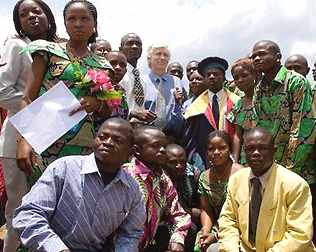
The overpopulation would result in poverty, sickness, and overcrowding. Poverty would occur because there would not be enough jobs to provide pay for everyone. Sickness would spread around everywhere because people are too close to each other, and most would not have proper health medication. This can be predicted by the population of Africa. Africa is extremely overpopulated. The crowdedness and limited space are all contributing factors to the high percentage of children and adults with fatal sicknesses.
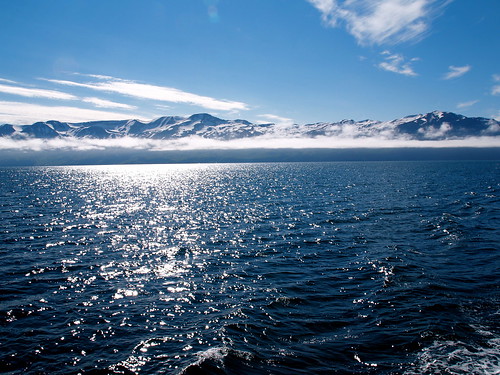
 The future for our world would not look very good. The population would continue to grow, only to soon have an extremely rapid decline because the earth has reached its carrying capacity. The people would also have to find a new place to live. Because the cities would be overcrowded, people would have to use areas that are not the most desirable. Such as extremely cold and icy areas like the Arctic Circle.


This video shows how much the earth has grown since 1 A.D. up until the current year.


Effect on Resources

With the extreme increase in population, will come an extreme decrease in the resources available to the population. Because the earth has reached its carrying capacity, there will not be enough recourses for everyone to have. For example, naturally grown vegetables will become extremely limited and have a high price for those who wants them.

Also, the meat will be limited if not non existent. The animals will not have enough land to live on, resulting in them becoming extinct.

 Another way that the population will have an effect on the recourses, is competition. People and animals will have to start competing for the natural recourses. Also, trees and wood will become limited because people will have to cut down trees for living spaces and materials for building.


Here is a video that examines the lack of concern for earth's recourses that our population has.

Effect on Nonhuman Species

The effect on nonhuman species will consist of them becoming premaritally extinct, unless there are changes one's lifestyle are made. A single American consumes about 67 pounds of meat per year. This number will continue to increase, resulting in other animals becoming extinct.

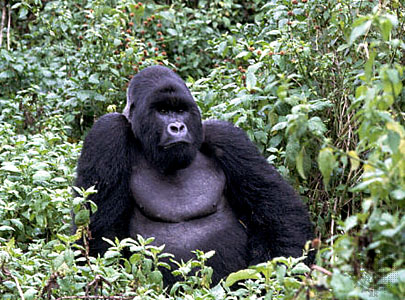
For example, animals that are already on the verge of becoming extinct, such as gorillas, tigers, ferrets, elephants, and pandas, will be the first to leave our earth.


 Because exceeded its carrying capacity, there are not enough animals to provide food for everyone. This will result in humans having to compete for food in order to survive. Another way that the nonhuman species will be affecting is by having them to relocate. Because there is limited space on the earth, humans will need to live in different places. For example, an african savannah will be used by humans, resulting in the humans driving away the animals.


Here is a video about some of the endangered species that may become extinct. 

Effect on Climate

When the population reaches 10 billion, the climate will make a dramatic change. As it has been seen in the past, when there are more people on the earth, the temperature increases.

With more people, there will be more cars on the highways, more gas burning utilities being used, and a greater need to use the remaining fossil fuels.


 As predicted, global warming will become an extreme problem on earth. Forests will be cut down to create space for living and materials for building homes.

With the trees cut down, CO2 will not be able to be returned to the atmosphere. In conclusion, the climate will become extremely high.

This is a video about global warming.

Effect on Biomes

The effect on biomes have a different result on each of the biomes. Here are several different biomes and how they will change.

Forest Biomes:
The forest biomes will become non existent because of the need to cut down the trees in order to provide space and materials for homes. The lack of trees will affect the carbon cycle.

Marine Biome:
The marine biome will be affected by the high chance of several large oil spills and overfishing. Oil spills might be a possibility because of the high need to get more oil from the ocean because of the lack of oil on the land. There would also be a lot of overfishing because of the need for food. 
Desert Biome:
The desert biome would not change as much as the other biomes. However, it might become more populated in order to find a living location for humans. 

Here is a GoogleEarth video that showcases several biomes of the world.